It Sounds Great On Your Headphones. That's Not Enough.
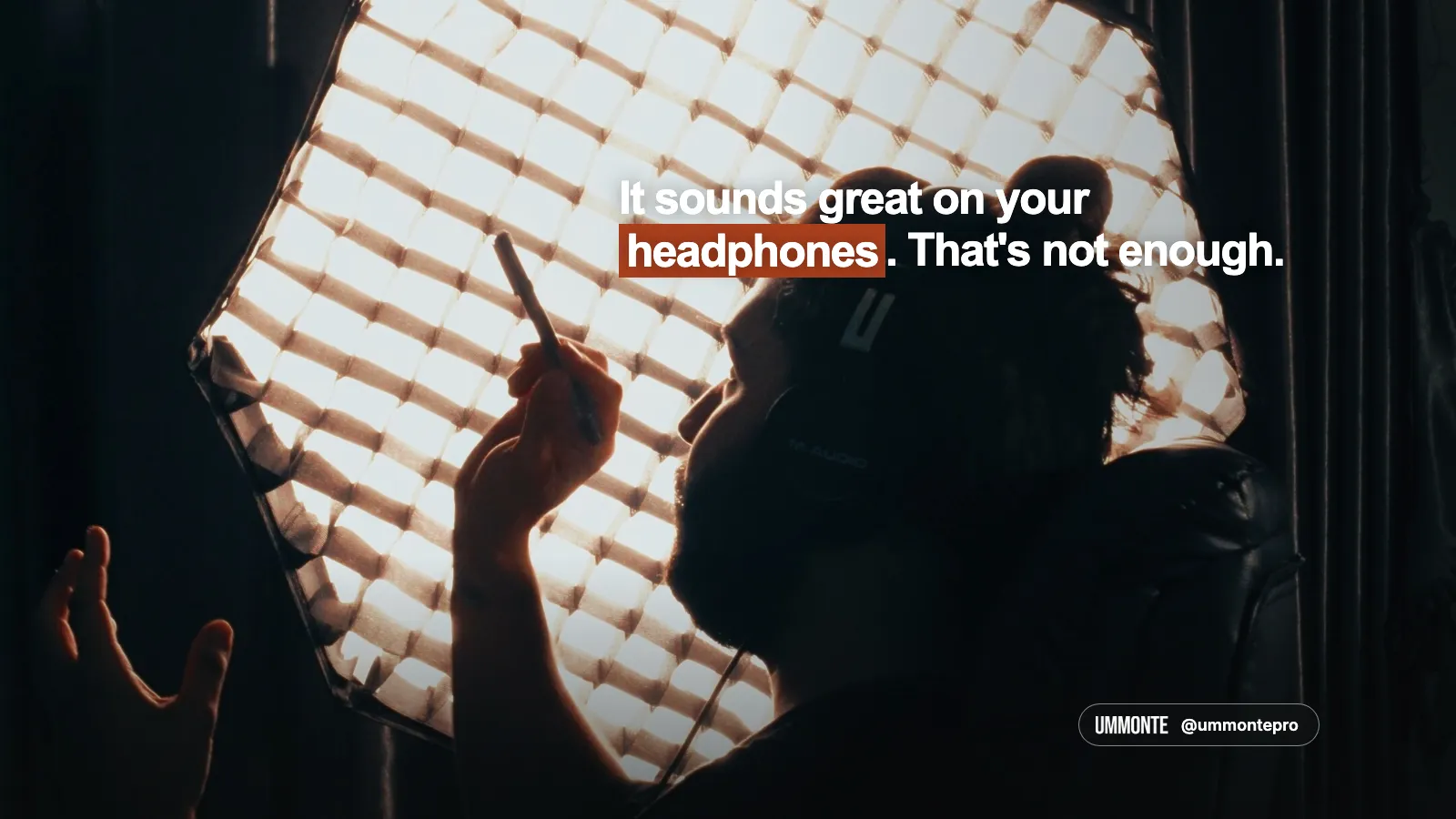
Picture an artist who just finished mixing a song. Three nights of headphone sessions, one export, a listen in the car on the way to grab food, and it goes up.
Nobody set out to skip a step. The song sounds finished. It sounds finished on the headphones that mixed it, on the laptop speakers, on the phone propped against a coffee mug at 2 a.m. That’s usually where the confidence comes from, and it’s also where the trap is.
A mix that’s only been heard in one room, on one system, by ears that already know every part by heart, isn’t tested. It’s just familiar.
This happens more often than people admit. A rough mix gets treated as a final one because the release date is close and the song already sounds good enough. Nobody’s being careless. The person who wrote every note can’t hear it the way a stranger will: on cheap earbuds, on a car stereo, next to fifty other songs in a shuffled playlist.
That’s the part that gets missed. A mix isn’t measured against silence. It’s measured against everything else that plays right before and after it. If the vocal disappears the moment a car window goes up, or the low end turns to mud on a phone speaker, that’s not a taste problem. It’s a format problem, and it only shows up outside the room where the song was made.
The mix that works in your headphones is not the same test as the mix that works everywhere your song will actually be heard.
Think about a soundcheck before a show. Nobody trusts the room from the stage. Someone walks to the back, stands where the crowd will stand, and listens from there. The song hasn’t changed. The angle has.
Mastering does something similar for a recording. Not extra polish stacked on top of a finished song. A pass that checks whether the mix survives contact with the real world: a phone, a club system, a pair of earbuds on a bus, a festival PA.
So what actually catches a mix before it ships?
- A listen on more than one system, beyond the room it was made in.
- A few days of distance, so familiarity stops standing in for judgment.
- A second set of ears that didn’t write the song.
- A pass done with the release format in mind, beyond the studio one.
None of this is about spending more. It’s about a second listen, somewhere else, before the release date, not after the comments start.
We think about this a lot, the gap between a track that’s technically finished and one that’s actually ready. It’s part of what keeps shaping a process that treats mixing and mastering as a real production step, not a formality tacked onto the end.
Talent writes the song. Readiness is what happens between the last take and the first stranger who presses play.
If a release is coming up and the mix has only ever been tested in the room it was made in, that’s exactly the kind of gap we help close before it goes out.
If this is something your project needs, get in touch.
Get new posts by email
Ideas for independent artists. We will send a confirmation email. If you do not see it, check your spam folder.